


Approximately 200 people recently attended a public open house to learn more about the proposed Community Planning Permit By-law and a related Amendment to the Town of Saugeen Shores Official Plan.
Andrew Davidge, Urban planner with Gladki Planning Associates, explained the purpose behind a CPP By-Law that has to be approved in order for the Community Planning Permit System (CPPS) to move forward and municipalities may choose to use the community planning permit system.
According to Davidge, the Province has stripped away most of the planning decisions that were previously handled at the municipal leve.
He pointed out however, that some concessions had been made following feedback received from the public at the March, 2026 Open House.
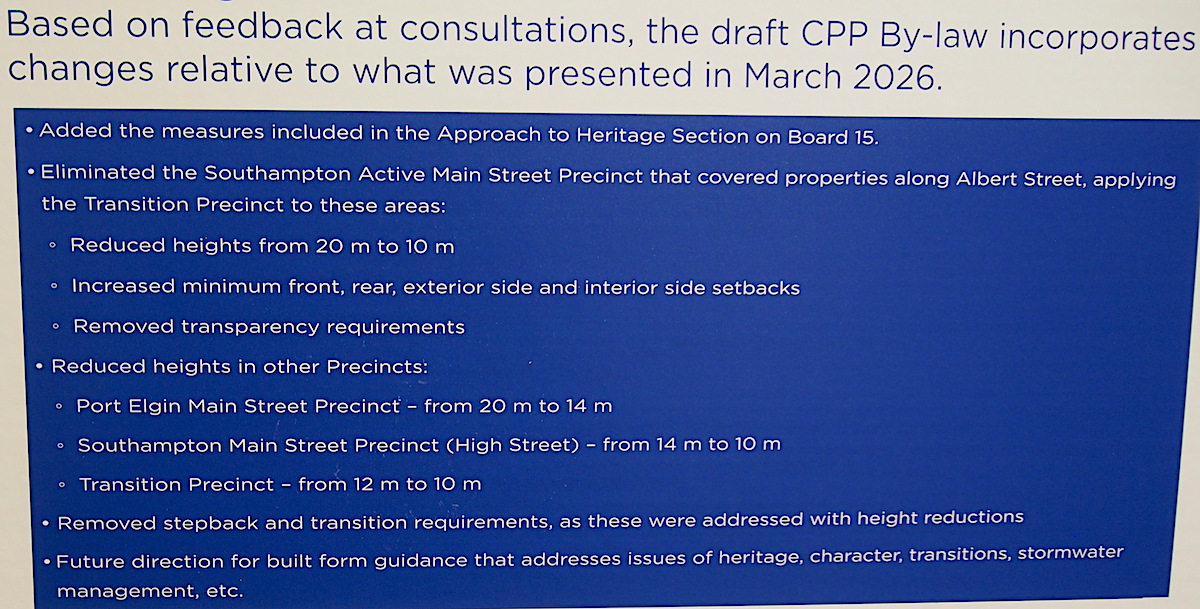
Municipalities can apply the community planning permit system to all of their municipality or to certain neighbourhoods or areas. Municipalities can also tailor the CPPS to meet their local needs as long as they meet legislative and regulatory requirements.
Municipalities must first amend their official plan (OP) by adopting policies for the area where the CPPS will be used. An official plan amendment must be approved and municipalities must then also pass a community planning permit by-law.
On July 13th, the OP amendment and By-law will come before Saugeen Shores Town Council for approval or to be deferred.
The Community Planning Permit is a land use planning tool that is to replace a standard multi-layered development approval process (zoning, site plan and minor variance), with a single process, previously known as the Development Permit System (a by-law passed under section 70.2 or 70.2.2 of Regulations re: development permits may refer to development permits as community planning permits.)
More changes are expected in the near future that are intended to support more compact housing development designed to increase supply. Future regulations are expected to remove municipal control over lot sizing and forms of building.
The impact of these changes is expected to be most pronounced in suburban and ex-urban areas, where existing zoning standards often require larger lots. The province will also be exercising greater provincial control over lot sizes which will result in more intensification over time.
The CPPS is designed to control land use development in the municipality and provides the discretion to determine the boundaries of the area that is to be governed by the community planning permit (CPP).
Once the CPPS is in place, the public will have little to no opportunity to provide input regarding a development or intensification housing. Under recent changes to the Ontario Land tribunal (OLT), most third-party appeals for official plans and zoning by-laws have been eliminated. Appeals are now generally limited to specific stakeholders, such as applicants, municipalities, NAV Canada, and certain aggregate permit holders.
According to ‘Engage Saugeen Shores‘ site, the purpose of the proposed Community Planning Permit (CPP) By-law (or Development Permit), is to create a set of development regulations for Port Elgin and Southampton Downtowns that would align with the vision of the Official Plan, support mixed-use development, and help to address housing needs.
“The CPP By-law would replace the Town’s existing Zoning By-law and Site Plan Control By-law and become the Town’s primary tool for regulating development in these areas. The Community Planning Permit System (CPPS), as set out in the CPP By-law, is intended to streamline the development approvals process by combining zoning amendments, minor variances, and site plans into one application and review process. The proposed Official Plan Amendment would enable the CPP By-law to be established and provide policy guidance.” (Engage Saugeen Shores)
For larger view, click on image
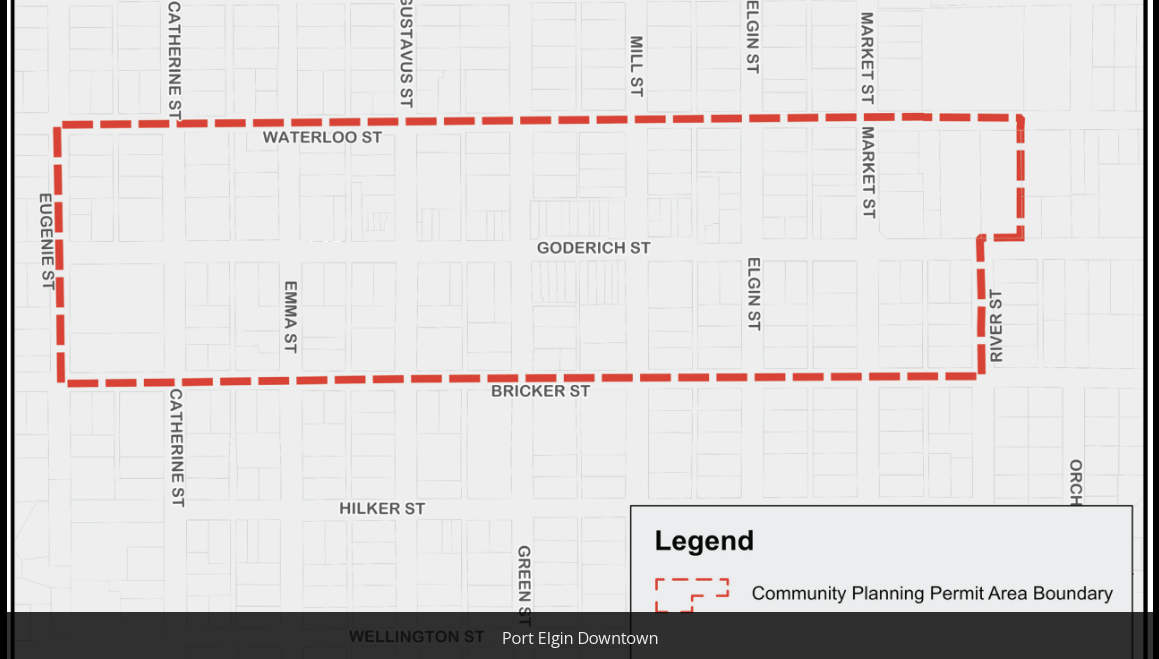
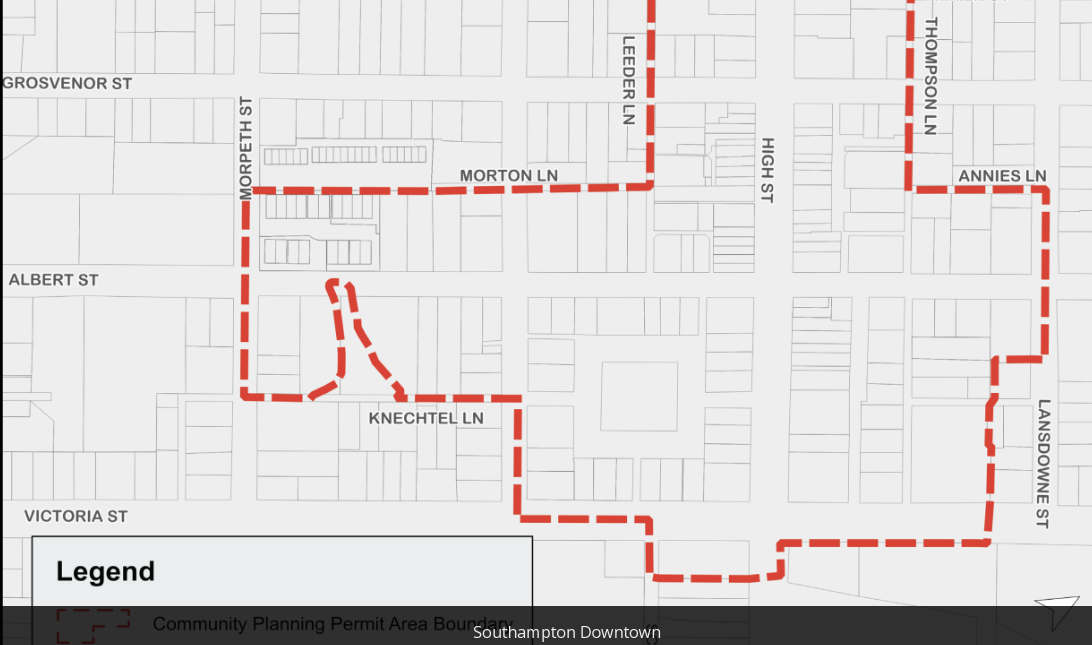
Many residents in Southampton have expressed concerns that the “… character and historic buildings and residences of the community’s downtown core area” may be changed with little to no public oversight.
Under changes to the provincial planning act, municipalities are also no longer required to include climate change policies within their official plans.
Under provincial regulations however, a community planning permit by-law is required before the Community Planning Permit System (CPPS) can be implemented. “After a community planning permit by-law is passed, privately-initiated applications to amend the community planning permit by-law are not permitted for five years, unless the municipality passes a resolution to allow these applications to proceed.”
The CPP also “… authorizes municipalities to be able to appoint employees to carry out the duties required under the development permit system and delegates to them the powers necessary to carry out these duties”.
“I am very worried about this,” said one resident who wished to remain anonymous. “It is taking away Council’s authority and handing it over to staff, which in turn takes away the public’s ability and right to be heard at Council about any proposed development.”
The Minister of Municipal Affairs and Housing may require municipalities to use the Community Planning Permit System in specified areas, such as along main streets or waterfront areas. In these cases, only the Minister can appeal the official plan policies or community planning permit by-law to implement the tool.