

Early in April, I flew to England to go on a WWII tour with two objectives.
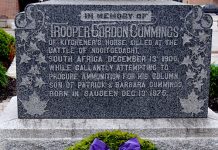
- To visit the grave sites, memorials, and battlefields in England and France of those from our community who made the supreme sacrifice in WWII.
- To follow the route that the Canadian troops took from Juno Beach on June 6, 1944, for the 11 weeks it took to clear the Germans from Normandy.
I arrived at Heathrow Airport on April 12th. On April 13th, I was picked up at my hotel by Frank Baldwin, a Certified Battlefield guide from “In Their Footsteps Tours”. This was my third tour with this very professional Military Tour Company from London, England.

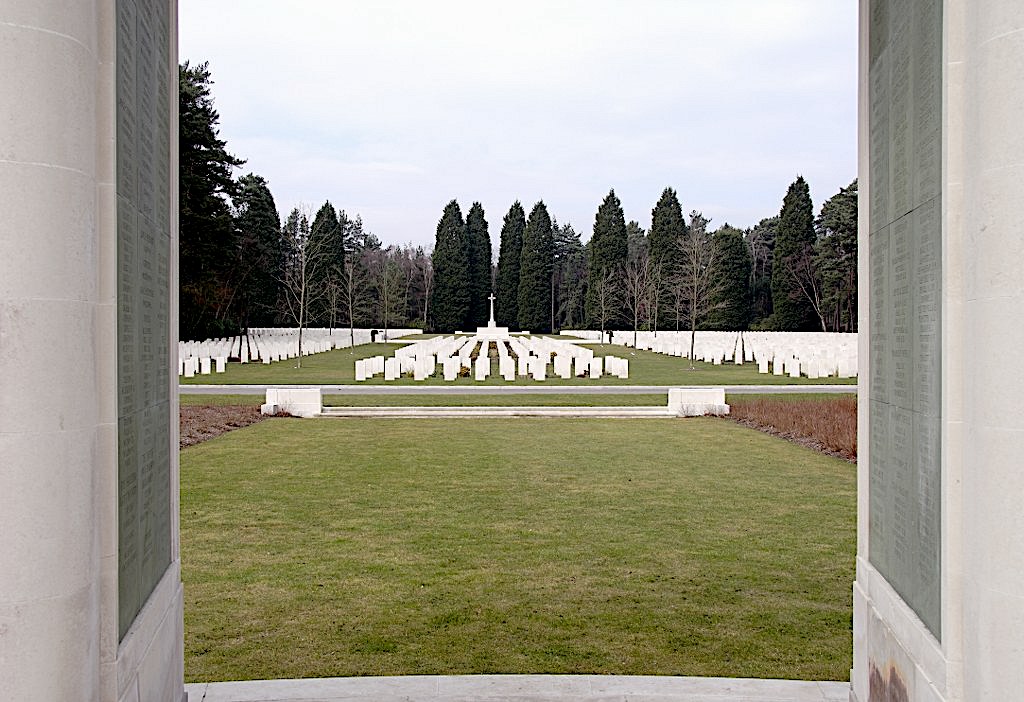
Our first stop was the Runnymede Memorial to Commonwealth Airmen in WWII who went missing on Missions from England and did not return. This beautiful memorial is situated in a large meadow close to the site of the signing of the Magna Carta in 1215, which laid out the basis of democracy.
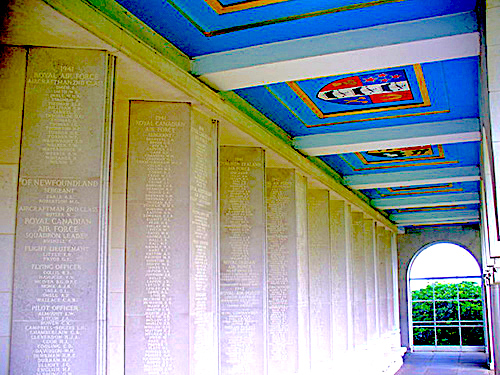
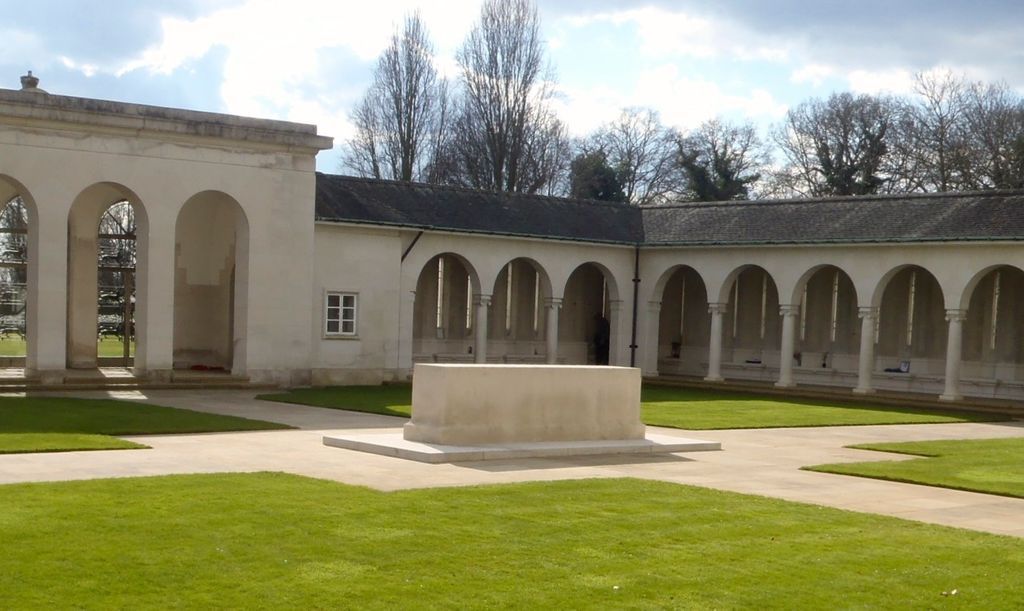
The Runnymede Memorial honours 20,000 Commonwealth Airmen who left British Airfields on bombing missions and did not return. Listed on long panels are their names and their crew members, all together. The lists include 1,279 Canadians, 15 from Bruce County, 3 from Port Elgin, and one from Southampton. I found all 15 Bruce County boys on the panels and read their names aloud.
The Airmen from Saugeen Shores were;
Lloyd Sylvester Ernst Port Elgin
Patrick Lloyd Vaupel “
Norman Gilbert Hettrick “
John Ballantyne Kennedy Southampton
Their bodies have never been found. They remain “Missing in Action Presumed Dead”.
Dr. W. H. Carson – Southampton – Heart Attack
Captain George A. Eaton – Port Elgin – Flight Training Accident
Air Bomber Curwood Neville Armstrong – Hepworth – Air Training Accident
Flight Sergeant Oliver A. Bettridge – Southampton- Air Training Accident
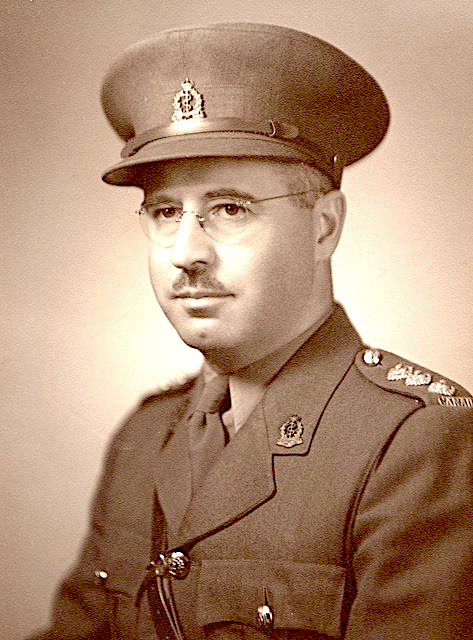
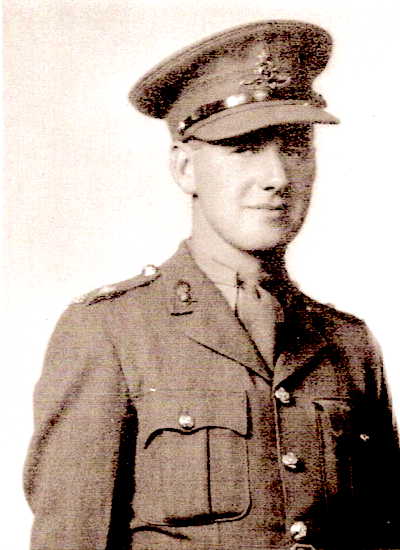
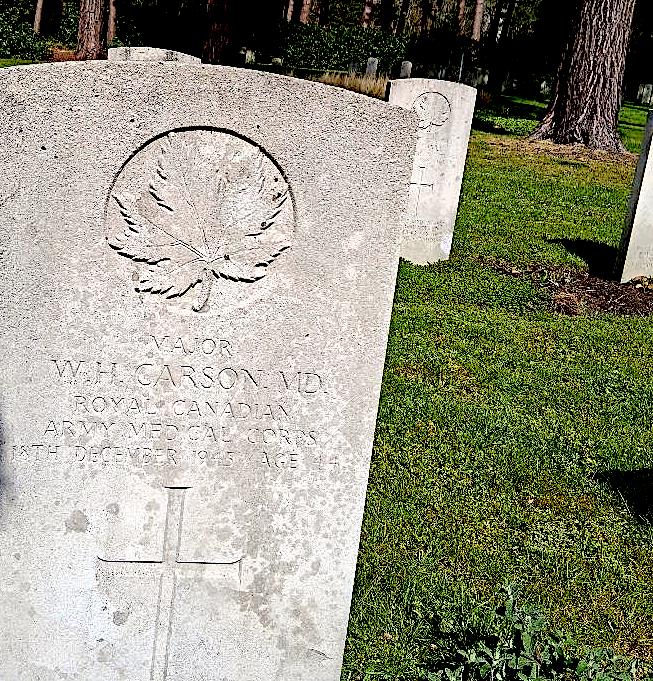
On each grave, I placed a poppy stone by each grave, from the local legions “No Stone Left Alone” program.
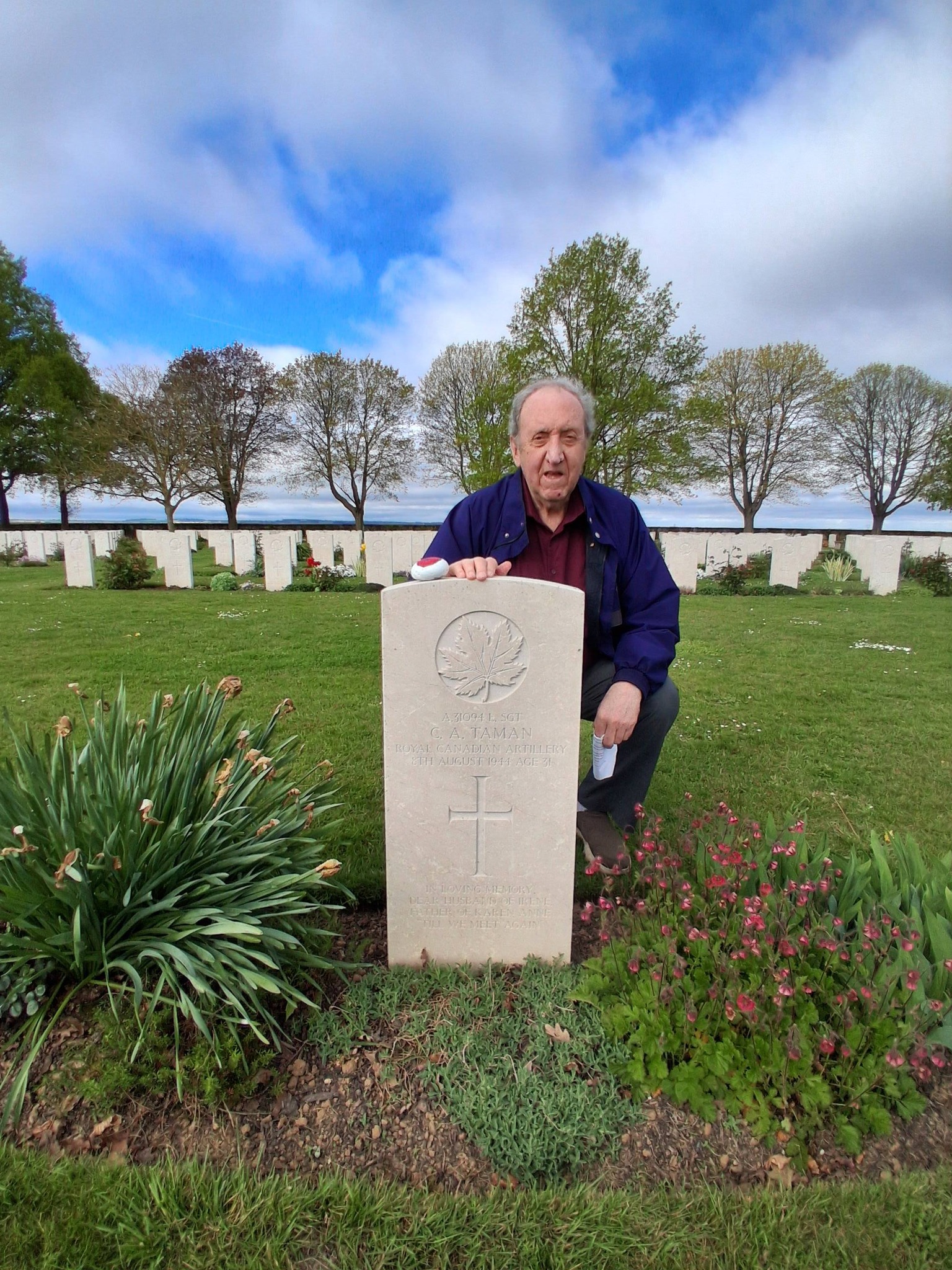
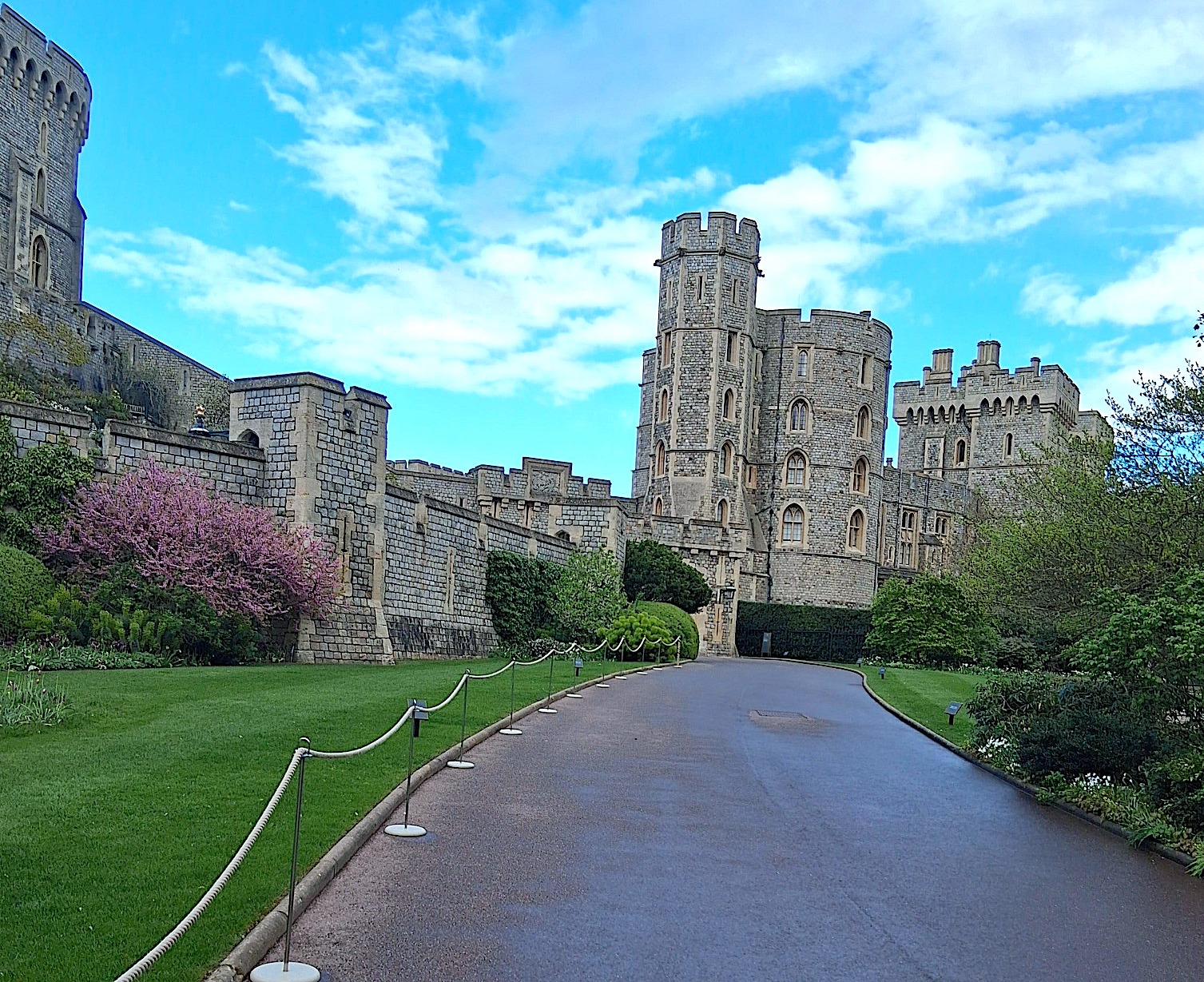
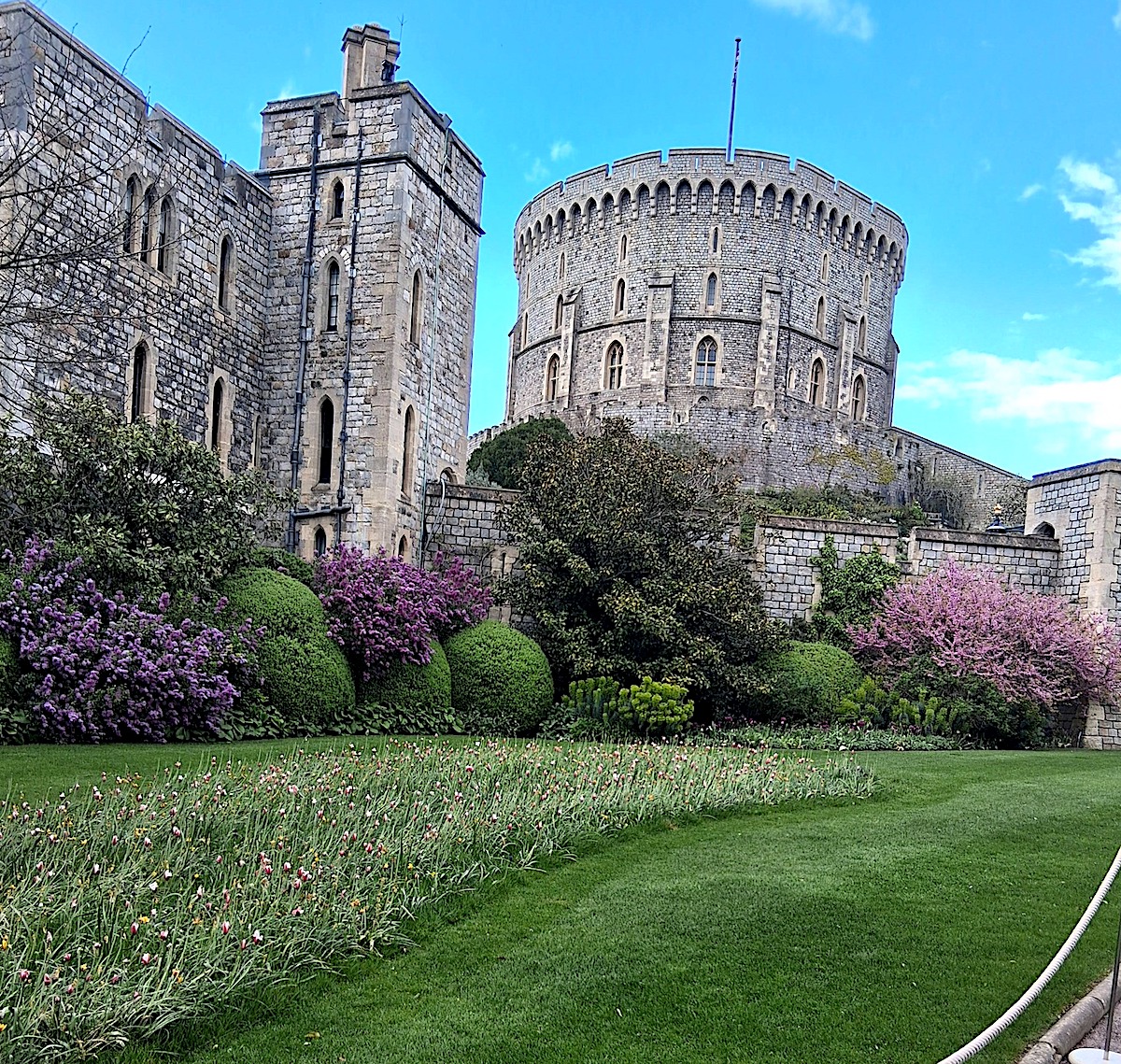
After lunch, we visited the massive ancient fort at Windsor Castle for a long walk around the grounds. It was very impressive. My Guide Frank, dropped me off in Downtown London at a hotel near St. Pancras Rail Station.
Next morning, it was off to catch the Eurostar Train to Paris. I was scheduled to catch the 10:31 train. It was a bit delayed due to the 9:31 train having difficulties. But off we went, speeding through the Chunnel to Paris. Speeds hit 334.7 kph. Cars on the highway doing 100 looked like they were standing still
On arrival in Paris, I was tight for time to get from Gare du Nord to St. Lazare Station to get to Caen in Normandy. There was a long lineup for taxis. A motorbike taxi was recommended. This was a site to see. An octogenarian on the back of a motorbike with his suitcase tied behind him, while racing and winding their way through heavy Paris traffic. With less than five minutes to spare, I caught my train.
I was met at the station in Normandy by my guide Mark Nicolas, a recently retired British Military officer. They have a B & B country home nearby, and I stayed with him and his wife for 3 days and nights.
The intent of the 3-day tour was to start from the invasion at Juno Beach on June 6, 1944, and follow the Canadians on the 11-week battle route it took to clear the Germans from Normandy, which took until August 21st.
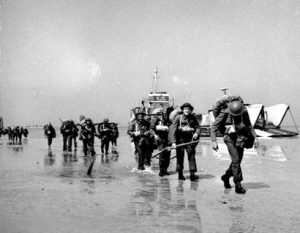 On June 6, 14,000 Canadian Troops landed on Juno Beach. They were supported by 10,000 from our Navy in 110 warships. In the air were 15 bomber and fighter-bomber squadrons. 379 Canadians died that day.
Juno was a 10km long stretch between the 2 small towns of Courseulles and St. Aubin-sur-Mer. Today, the walk along the shore street in St. Aubin-sur-Mer looks much like that day 82 years ago. I have a picture that clearly shows the comparison.
In the days that followed, the Canadian force grew to include 45,000 of Canada’s best. The first month of the battle was very intense and close to the coast. On July 4, they had gotten less than 18 km inland when the first casualty from our community died. He was Liard Redford Beresford, and he died at the Carpiquet Airport, where the Canadians faced intense and brutal combat.
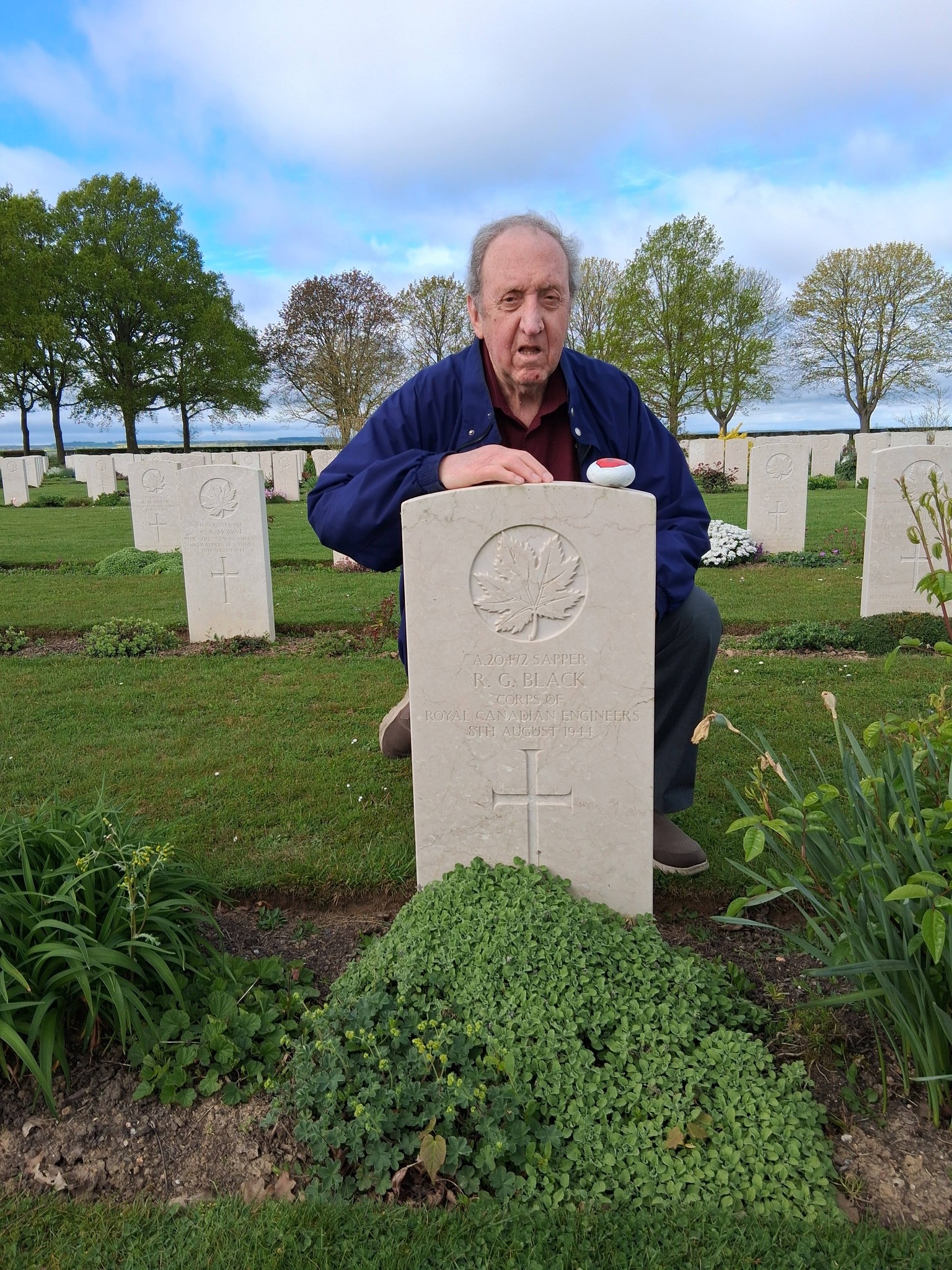
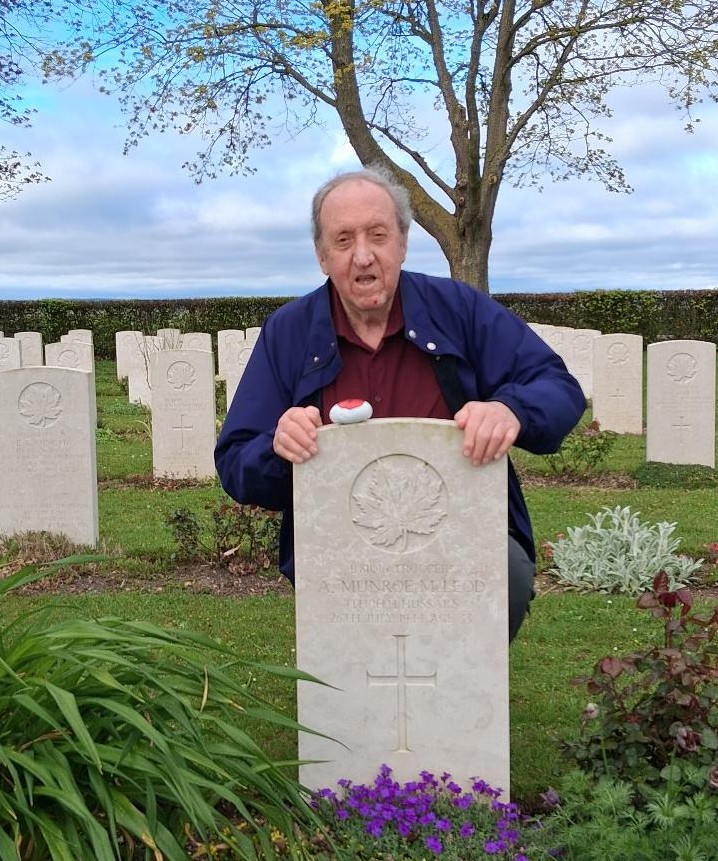
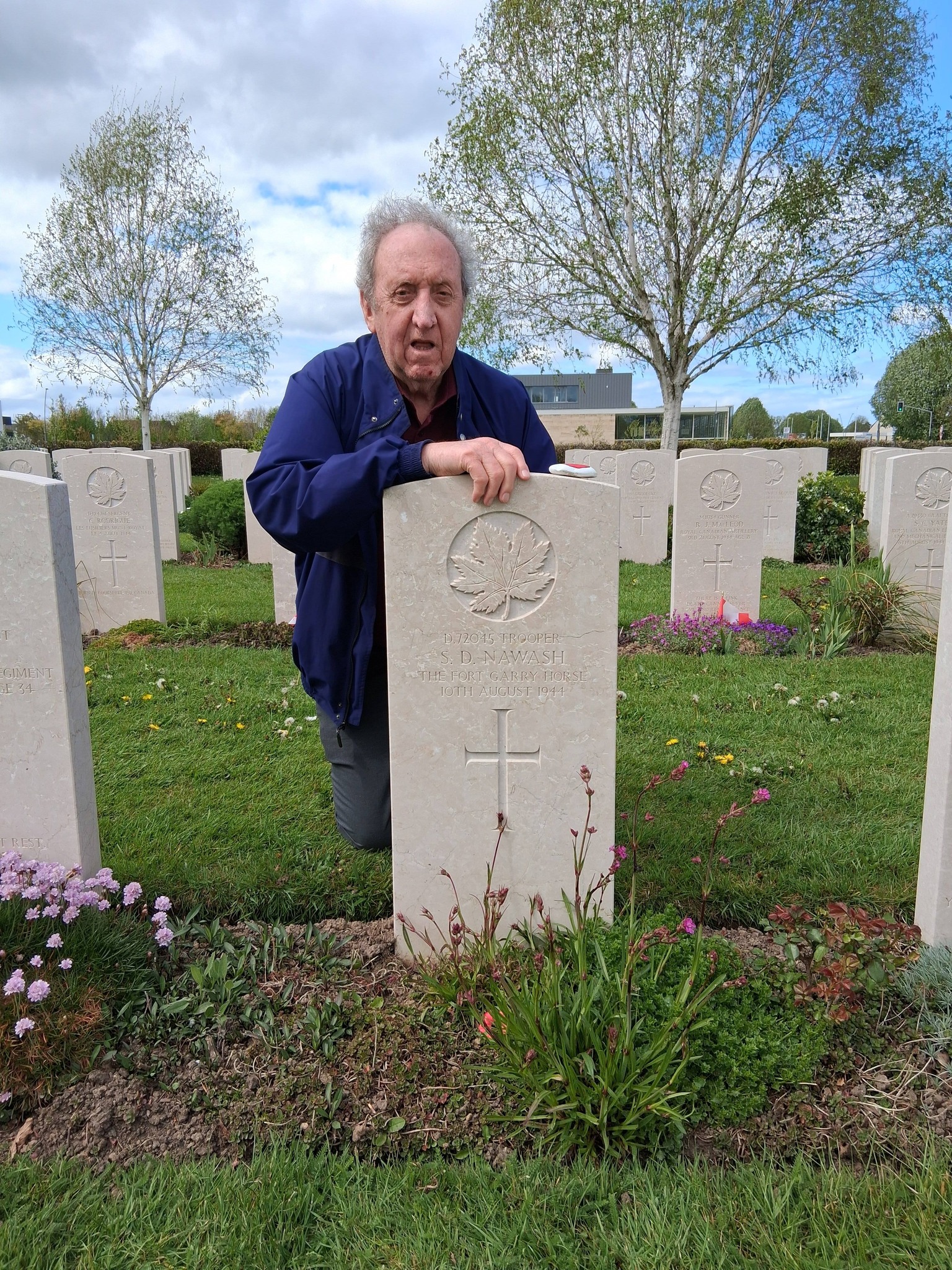
The push to remove the Germans from Normandy continued. We travelled along the Rue-de-Canadiens. August 8th, 1944, our community had one of the worst days of WWII. In a friendly fire incident a group of American bombers, accidentaly, dropped bombs on Canadian and Polish troops, killing or wounding more than 300. Three local boys died because of that.
- Ralph George Black -Southampton
- Angus Monroe McLeod- Southampton
- Stafford David Nawash -Saugeen First Nation – Died from wounds 2 days later
- Also, that day and in that event, Clifford Alfred Taman from Allenford, also died.
I visited the Bretteville-sur-Laize cemetery where Black, McLeod, Beresford and Taman are all buried. Stafford David Nawash died in the hospital in Bayeux. I visited his grave there in the Bayeux Military Cemetery.
Along the way to the Falaise Gap, we stopped at various points of interest, mostly British sights, but on the same route the Canadians followed. Canadian Major Currie was awarded the Victoria Cross for his inspired leadership while commanding the corps.
The allies gradually closed the pocket surrounding the Germans. In the final days before Augusr 21, the allies took more than 50,000 German prisoners. Few escaped to retreat to the Belgian border. The Falaise info centre had some great photos and maps of the last days of the battle that removed the Germans from Normandy after 6 years of occupancy. The view of the battlefield from the centre was stunning.
The next morning, we stopped at the Beny-sur-Mer Canadian Military Cemetery. There were 5 Bruce County boys buried there, none from our community. I visited all five of their graves.
I had decided to take the ferry from Caen to Portsmouth to finish off my tour. It was in the reverse direction that our troops had taken in June of 1944.
I arrived near Heathrow late at night. Next morning, it was up and off to fly home.
The end of a 7-day whirlwind.
WE WILL REMEMBER THEM