

On Thursday, May 21st, local historian G. William (Bill) Streeter presented the moving stories of several local WWI service men, who were killed or considered missing in action (MIA), to a small but appreciative audience.
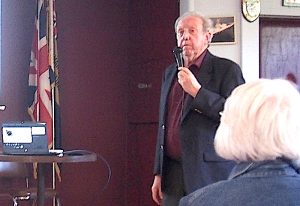
The presentation at the Southampton Legion Branch 155 included the story of Lt. J. Lionel Tranter of Southampton who was killed in action in France.
Today, Lt. Tranter has become the centre of a search for his remains being undertaken by Acadia University’s Dr. Aaron Taylor, who participated in the evening event through a ‘zoom’ call.
Taylor has taken part in several searches for lost service men and, in 2012, tried to initiate a search for Canadian Service men. “I wrote a letter to the Harper government and received a reply that “it was not in the interest of the Canadian public”. I tried again with the Trudeau government with the same result. It’s strange because when I talk to people, they are very interested.”
When U.S. families of Vietnam soldiers initiated steps to have their lost service men found, the Reagan government agreed and went to Congress for permission. Taylor pointed out that the United States government now carries out some 44 missions each year. Other countries, including Australia, Germany, Russia and Japan have also all started programs.
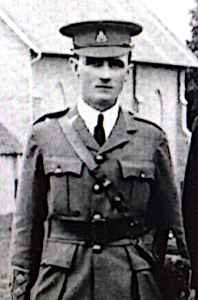
Streeter learned about Taylor’s quest through a newspaper article and contacted him pointing out that he had researched Lt. Tranter and discovered where he was buried in France. “I was excited to get Bill’s email along with messages from loved ones of Lt. Tranter,” said Taylor.
He explained that there are three phases to locating Tranter. There is the permitting process to allow geo-physical exploration with ground-penetrating radar. “The challenge is that there is expected to be a lot of metal due to shrapnel and there may also be many bodies buried there. Then, another permit from the French government will be required to do excavations along with approval by the Canadian government.”
Taylor pointed out there will also be expenses incurred ranging up to $25,000 for the first phase and then the recovered remains will require them to be handed over to the Canadian government. “I believe remains should be returned to families and should not be based on a dollar amount.”
Among those in the audience were direct descendants of Tranter, Max Trelford with grown children Sarah and her brother Jamie Trelford. According to Max Trelford, the family also has several cousins in Kenora (ON), Nova Scotia and Glasgow. “I have Lionel’s sword and letters he wrote and they will one day go into our Bruce County Museum and Cultural Centre where there is other memorabilia along with his medals.”
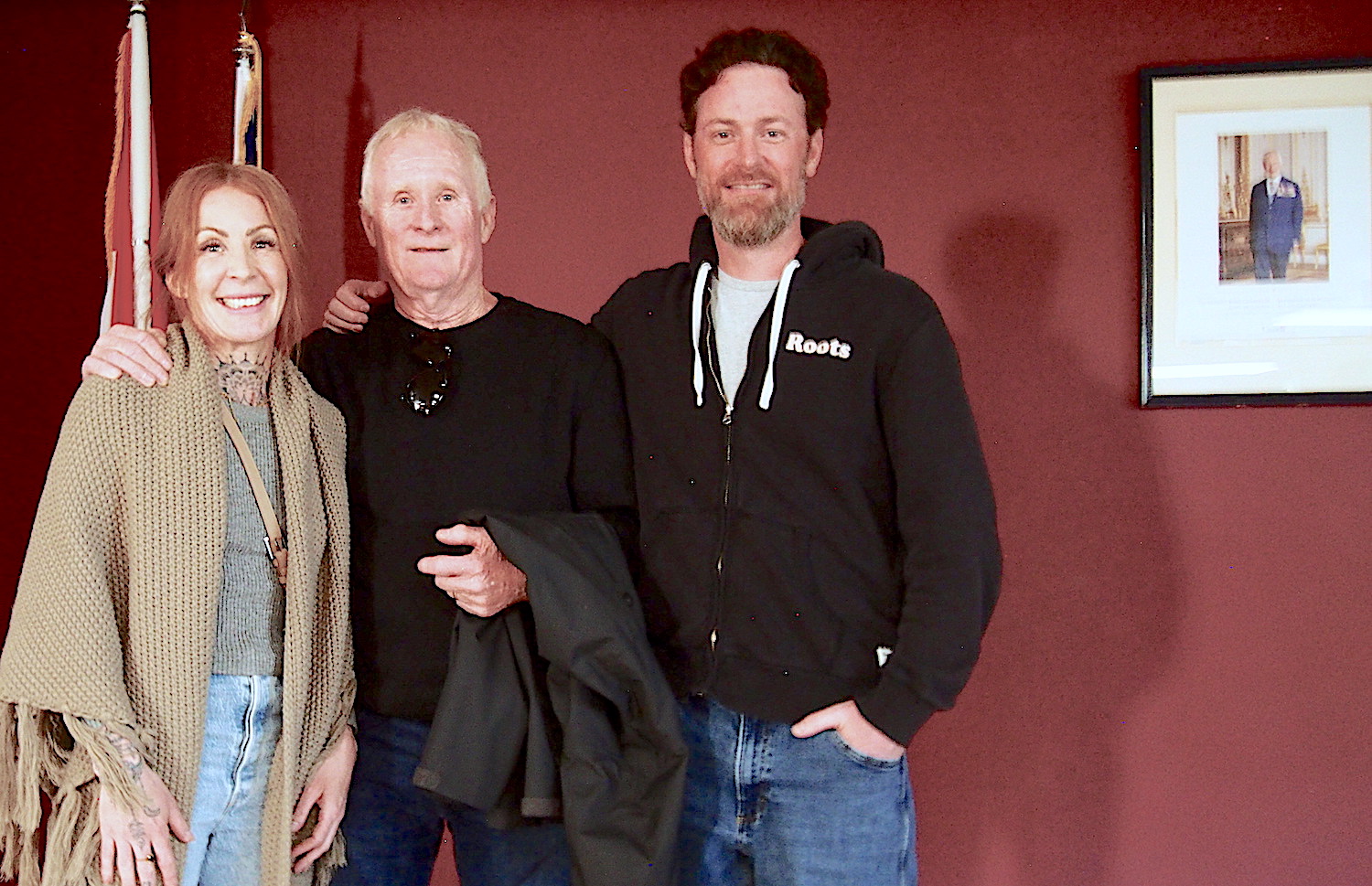
Although today’s DNA is a sophisticated method of determination, Taylor also said that biological profiling can be used. “There is a lot of protocol involved to return remains and the site where Lt. Tranter’s remains are expected is a farmer’s field today.” Max Trelford said however, that he was more than willing to provide DNA assistance if needed.
When asked how successful Taylor had been in the past with recovery initiatives, Taylor said he had succeeded in five out of six missions.
Streeter pointed out that initiatives were also being taken locally to involve local MP Alex Ruff (ret’d Colonel in the Canadian Armed Forces) and Defence Critic for the Conservative government. “The Southampton Legion has also agreed to match dollar for dollar funds raised through donations to help with the recovery of Lt. Tranter.”
Today, leading up to Remembrance Day on November 11th, banners of local soldiers who paid the ultimate sacrifice are hung in many local communities, including Southampton and Port Elgin. Among the banners, is Lt. J. Lionel Tranter and his cousin, William Victor Tranter, with their story as told by Bill Streeter on video.
Donations for the Tranter initiative to help defray costs can be made at the local Southampton Legion Branch 155 by cash or cheque or at the Acadian University site.