
In WWII, as it was in WWI, the bodies of many of those who died in battle were never found. The Canadians who died and whose bodies were never found in WWI, are named and honoured at the Vimy Memorial in France and the Menin Gate in Belgium.
There were 66,349 Canadians in WWI who died in uniform. The bodies of 18,209 were never found, 11,285 are remembered on Vimy and 6,924 are honoured on the Menin Gate in Ypres. There were 650,000 who served.
In WWII, things changed significantly and the bodies of most Canadian soldiers, who died, were found and buried with honour in the many beautiful cemeteries spread throughout Europe. Canadian military deaths in WWII totaled 42,042 of the 1.1 million who served.
Such was not the case with Airmen. Thousands died when their bombers and fighter planes were shot down in action or on their way back to base. Some were found and buried in Commonwealth cemeteries in Europe, along with our soldiers who had died close by. In WWII, the Commonwealth Air Force had more than 116,000 men and women who enlisted and served. There are 20,456 of them who died and have no known grave, and they are Commemorated by name on the Runnymede Memorial, at Englefield Green, 32 km west of London England.
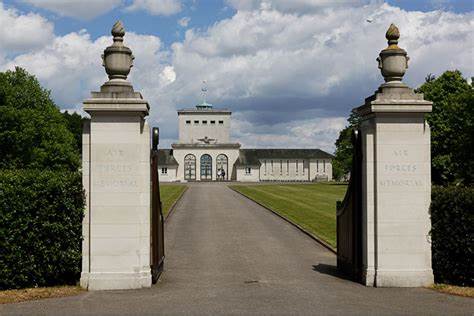

Canada had more than 17,000 who enlisted and there were 3,031 honoured along with their Commonwealth comrades who made the supreme sacrifice. The memorial sits on the crest of Cooper’s Hill, overlooking the Thames. There are two lookouts, one facing towards Windsor Castle and the other towards Heathrow Airport. Above the three arched entrances is a great stone eagle with the Royal Air Force Motto. “Per Ardua ad Astra” , translated “Through Adversity to the Stars”.
Below the motto is the following inscription. “IN THIS CLOISTER ARE RECORDED THE NAMES OF TWENTY THOUSAND AIRMEN WHO HAVE NO KNOWN GRAVE. THEY DIED FOR FREEDOM IN RAID AND SORTIE OVER THE BRITISH ISLES AND THE LANDS AND SEAS OF NORTHERN AND WESTERN EUROPE”.
In the tower, there is a shrine that provides a quiet place for contemplation, contains illuminated verses by Paul H. Scott from which the following extract has been taken:
“HERE AT THE HEART OF ENGLAND, HALFWAY BETWEEN ROYAL WINDSOR AND LORDLY LONDON, LOOKING DOWN. HERE, WHERE THE TREES TROOP DOWN TO RUNNYMEDE MEADOW OF MAGNA CARTA, FIELD OF FREEDOM. NEVER SAW YOU SO FITTING A MEMORIAL, PROOF THAT THE PRINCIPLES ESTABLISHED HERE, ARE STILL DEAR TO THE HEARTS OF MEN”.

The names of the 20,456 who have no known graves are inscribed on the stone reveals of the narrow windows of the cloisters and the lookouts. Scattered amongst them are the names of 3,031 Canadians. If anyone goes to the Runnymede Memorial there are three panels you must visit.

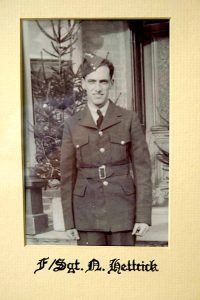
On Panel 60 is the name of Norman Frederick Hettrick of Port Elgin. He was the co-pilot of a Wellington Bomber that was shot down while on a bombing mission on November 26, 1941. The bodies of him and his 5 fellow crew members were never found.

On Panel 103, one will find the name of Lloyd Sylvester Ernst. His father was an Evangelical minister, and Lloyd came to Port Elgin as a young boy.
Lloyd was only 20 years old when on September 25, 1942, the large 4-engine Handly Paige Halifax Bomber did not return from a bombing mission.
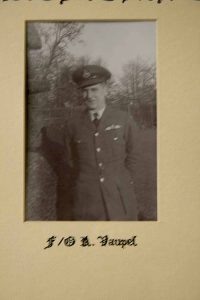
On Panel 175 is the name of Frederick Leroy Vaupel. His family arrived in Port Elgin in 1932 when he was 20 years old.
He enlisted in the RCAF in 1940 and was selected to train as a single-engine fighter pilot. The Mustang was the most popular one-man plane for Commonwealth Pilots.
On June 17, 1943, he was on patrol in the Bay of Biscay, off Spain when he did not return.
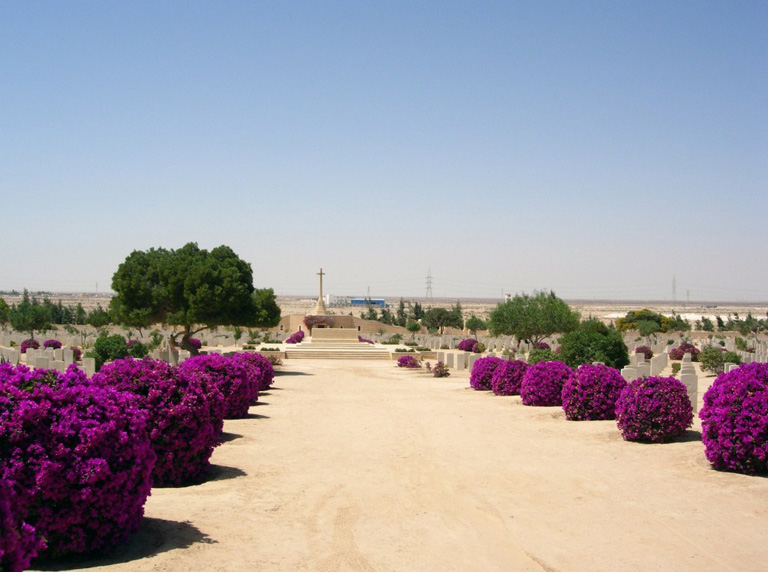
 There was one other airman from our community who died and he is without a known grave. Most unfortunately, he was the younger brother of Fred Vaupel. Raymond Ernest Vaupel arrived in Port Elgin in 1932 at age 15. He joined the RCAF in 1941 and trained as a bomber pilot. Upon arrival in England, he was assigned to North Africa where he was the only Canadian in the bomber crew. Flying out of Egypt, they were on a night bombing mission on Tobruk in Northern Lybia. There were two reports of the crew being killed when downed in the Mediterranean. The first was that all five had died. The second report had only Ray and one other dying. Ray is named on a Memorial in Alamein, Egypt on Panel 283. Canada did not have a major role in Africa and the Middle East in WWII. There are 213 Canadians buried or Memorialized on Panels in Alamein.

WE WILL REMEMBER THEM

Researched and Written by G. William Streeter